- EXPLORE FURTHER: Surprising findings on Generation Z’s wellbeing compared to elder cohorts
The cohort that matured during TikTok is producing the latest batch of doctors — along with their distinctive lingo, jokes, and tendency to share too much information.
Generation Z, which includes individuals born between 1997 and the early 2010s, means numerous members are now finishing up their education at medical schools across the country and moving into advanced residencies at various hospitals nationwide.
And their millennial patients are facing this truth. 'If you haven't encountered a Gen Z doctor yet, prepare yourself,' said middle school teacher Mandi.
Mandi has recently been diagnosed with idiopathic disease. intracranial hypertension , a condition where pressure builds up around the brain.
After Mandi’s most recent episode of losing consciousness, she and her partner visited an urgent care facility.
‘The doctor comes in and she’s like, “Yo dawg, you passed out four times in the past 48 hours? You need to go to the emergency room. By ambulance.”
‘She listened extremely patiently as my millennial boyfriend and I explained that we couldn’t manage the cost of the ambulance, and then she remarked, “Just don’t pay it. What could they possibly do about it?”’
Mandi characterized the encounter as 'charming,' although certain individuals find it disconcerting when younger physicians display such ease and informality in their approach to patient care.
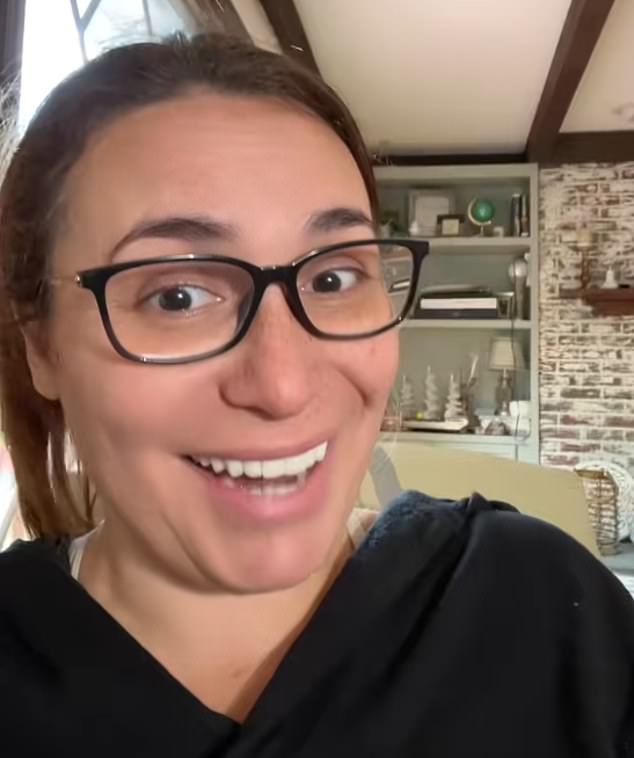
Sammy, a mother of three, had a run-in with a young doctor in the emergency room, leaving her flummoxed.
One of her daughters gets frequent, persistent nosebleeds.
The family has tried every trick, she said: pinching the bridge of the nose, tipping the head forward, tipping the head backward, and more.
Her daughter got a particularly severe nosebleed on the way to a birthday party.
His grandmother, who was accompanying him, took him to the emergency department, where Sammy and her spouse joined them.
The young physician, whose precise age remains unknown, spoke with Sammy’s daughter 'as though she were his equal or as though he were hers.'
The doctor informed Sammy's daughter that the nose contains many fragile blood vessels, with some being quite near the brain, which can break open leading to nosebleeds.
Sammy continued: 'Out of nowhere, he simply says, "That’s the reason we snort cocaine!"'
She gazed at her spouse, and they shared bewildered glances.
"And he said, 'Imagine this, eating would be simpler, but snorting delivers it into your bloodstream way quicker,'” she chuckled.
Whenever she shares that tale, she mentions that others advise her she ought to have reported the physician to his superiors due to improper behavior. However, Sammy disagrees with a shake of her head: "No, I adored him," and further explains that her daughter completely grasped his character and enjoyed his sense of humor.
A number of patients have observed that junior physicians tend to be more attentive to their requirements and worries, showing greater empathy and zeal. These young doctors also appear less prone to recommend potentially harmful drugs, for instance, benzodiazepines such as Xanax.
Reddit users characterize years of seeing doctors in their 60s and 70s as frustrating, futile endeavors to understand the cause of their pain or other symptoms.
One called older doctors ‘smug’ and ‘very comfortable with guessing as long as it's easy,’ while another said, ‘Old doctors don't care. Younger ones look for solutions.’
A third said: ‘I find that younger people care the most and have up-to-date knowledge, when older doctors just try to grab as much cash as they can for a fancy retirement.’
Their experiences are not uniform, though.
Some have characterized younger doctors as deficient in the medical and clinical instinct that develops over years of experience and interaction with patients.

A patient mentioned: "I've got a new physician who seems younger than I am. When I informed him about my belief that I might be entering perimenopause, he responded saying it was likely not that; instead, it’s simply the effects of turning 40 making me feel this way."
'I must figure out how to record every detail now so I can demonstrate to him that this isn’t merely in my mind.'
By 2030, Gen Z is expected to comprise approximately 30 percent of the healthcare sector employees.
The senior physicians have shown some reservations regarding this matter and uncertainty about whether the upcoming trainee doctors will withstand the lengthy educational period needed before they begin treating patients.
'As members of Generation Z are used to obtaining information instantly, they might delay working on tasks until the deadline approaches and assume that educators should be accessible around the clock for queries,' said a group of three family medicine residency leaders at Oakland University.
'Even though they excel at locating information, they might not assess its validity with sufficient evidence. They lack the ability to critically evaluate information and will need this training through interactive methods.'
'Teachers might have to help students locate and assess reliable information, along with establishing deadlines for completing their assignments.'
Read more
Komentar
Posting Komentar